When is the best period of time to climb Kilimanjaro?
If you want to enjoy a beach vacation in the tropics, but leave in the wrong season with the rain, you’ve wasted your vacation.
Try to climb a mountain in the wrong season, and you’re not just talking about a suntan you’ve missed, you’re talking about the success of the climb, and even putting your own life at risk.
Climbing Kilimanjaro, the roof of Africa, is an exceptional adventure, but one that requires meticulous preparation.
One of the most crucial decisions we have to make is when to embark on this expedition, in a country where climatic conditions vary throughout the year, especially at altitude.
This guide will help you identify the best times to climb Kilimanjaro, taking into account the climate, tourist numbers and other factors essential for a successful ascent.
Your free quote for climbing Kilimanjaro
Prepare your adventure with complete peace of mind: receive a personalized estimate within 24 hours, tailored to your dates, your level, and your wishes.
Discover Kilimanjaro’s climate before you go
Seasons in Tanzania
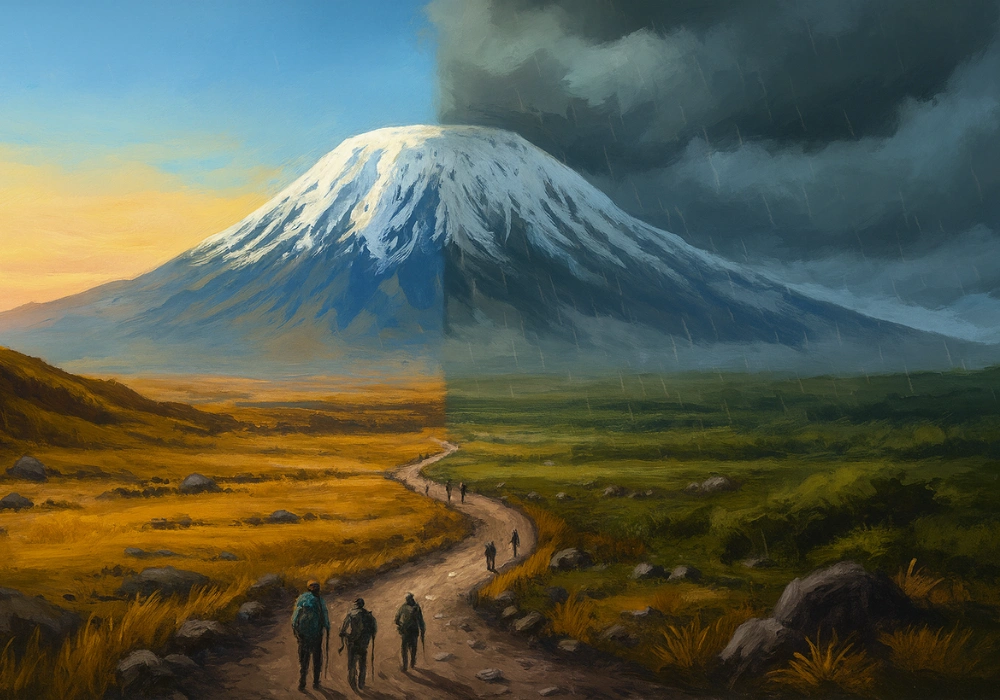
Tanzania is located near the equator and has two main seasons: a dry season and a rainy season.
Dry season (January to mid-March and June to October)
These periods are generally the best for climbing. Conditions are more stable, with clear skies and little rain.
For example, I climbed in September and didn’t get a single drop of rain. What’s more, weather conditions were stable at the summit, enabling me to reach the summit in complete safety.
In fact, Jerry (the guide on my ascent) explained that the majority of the climbs took place from mid/late May to October.
Long rainy season (April to May)
This period is marked by heavy rainfall, making trails slippery and conditions more difficult for hikers.
If you’re not used to the mountains, bad weather or cold, we recommend you avoid this time of year.
Even when you’re used to it, not taking a shower for a week and facing temperatures that can drop sharply overnight can make for an unpleasant experience. Then imagine, when added to all this, not having a single dry, warm item of clothing to wear because it’s constantly raining.
Short rainy season (November to December)
Although less intense than long rains, these showers can be frequent and unexpected, limiting visibility and making some passages muddy.
Even if conditions aren’t optimal, it’s still possible to make an ascent during this period. It’s often at this time of year that guides and porters make so-called “pleasure” ascents with friends. As there aren’t many clients, they can take the time to make their own ascents.
Temperatures and precipitation by month
Climatic variations on Kilimanjaro are not limited to the seasons: they also differ according to month and altitude.
Here’s what you can expect:
Low altitude (plains and forests)
Temperatures vary between 20 and 30°C year-round. Rainfall is heaviest during the wet season.
Medium altitude (moorland and heather)
Temperatures fluctuate between 5 and 15°C, with stronger winds. Precipitation decreases with altitude.
High altitude (alpine zone and summit)
Temperatures drop drastically, sometimes reaching -20°C at night. Snow is frequent, especially between May and October.
In short, each month brings its own specific conditions, which influence not only the comfort but also the safety of the climb. Choosing the right time of year is therefore essential if you are to enjoy this unique experience to the full.
When is the best period of time to climb Kilimanjaro?
Choosing the right time to climb Kilimanjaro is an essential step in ensuring a successful experience.
Weather conditions, tourist numbers and personal preparation play a key role in this decision.
Here’s an overview of the two ideal times to embark on this adventure.
January to mid-March
Advantages and disadvantages of this period.
Benefits
- Clear skies and moderate temperatures: perfect for enjoying breathtaking scenery and capturing spectacular photos
- Fewer visitors: although this period is favorable, it is generally less crowded than the mid-year dry season.
- Fauna and flora observation: January and February are the best months to enjoy the verdant countryside after the short rains of November-December.
Disadvantages
- Heat at low altitudes: temperatures can be high in forested areas, making the first stages more demanding.
- Risk of precipitation at the end of the period: as March progresses, rainfall becomes more frequent, particularly at lower altitudes.
Late May/early June to late October
This period, which also corresponds to the dry season, is considered the best time to climb Kilimanjaro.
Benefits
- Clear skies and cool temperatures: ideal conditions for hiking, with excellent visibility and little precipitation.
- Stable climate: Trails remain dry and passable, even in rainforest areas.
Disadvantages
- July and August are very busy months: coinciding with the summer vacations in many Western countries, they attract large numbers of hikers .
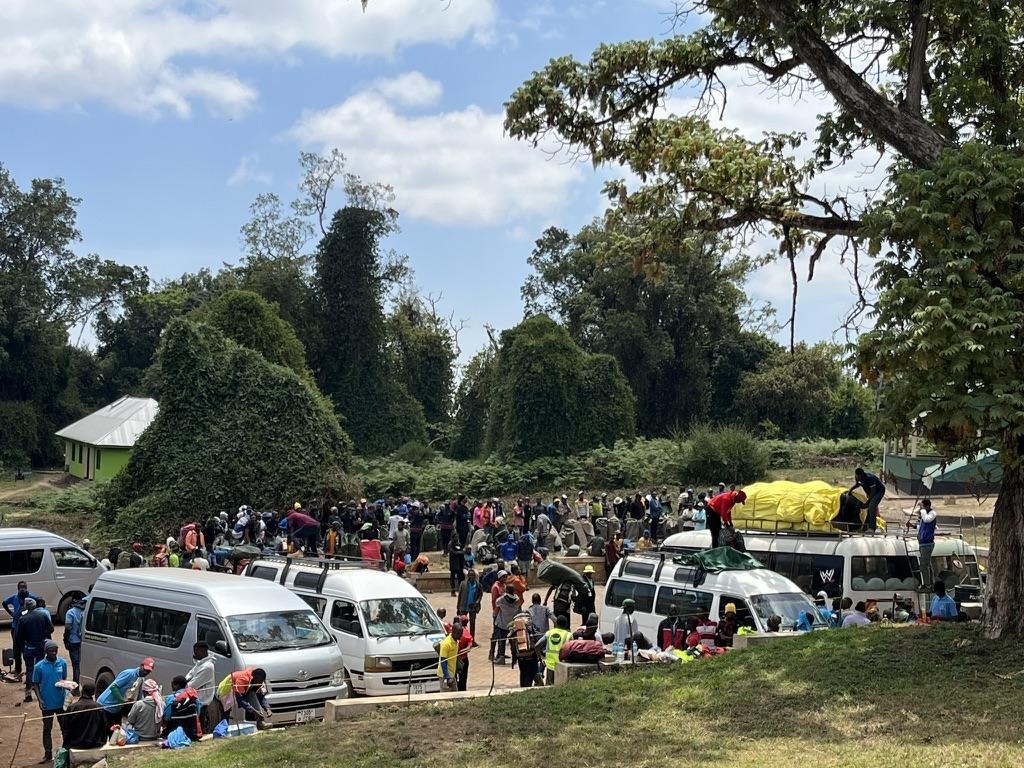
(Photo taken at the beginning of September: you can still see many people preparing their climbing)
Nota bene: Less crowded in September and October: these months offer an excellent alternative to enjoy the same conditions with less density on the trails.
When should I avoid climbing Kilimanjaro?
Although Kilimanjaro can be climbed all year round, some periods are less favorable due to difficult weather conditions.
Here are the periods of time to avoid, except if you want to reduce your comfort and safety.
Long rainy season (April to May)
The long rainy season is considered the least favorable time to climb Kilimanjaro.
These months are marked by heavy and persistent rainfall, which has a considerable impact on the hiking experience.
Difficulties encountered during this season :
- Slippery and dangerous paths: heavy rain makes paths muddy and more difficult to cross, increasing the risk of falls and injuries.
- Poor visibility: the sky is often overcast, which limits panoramic views and reduces the appeal of the climb.
- Constant humidity: clothing and equipment can remain wet, causing discomfort and increasing the risk of hypothermia at high altitudes.
- Less observable wildlife: most animals seek refuge during this period, reducing opportunities for observation.
Short rainy season (November)
Although less frequent, rains are regular in November. For this reason, November is not a good time to climb Kilimanjaro.
Impact on ascent and visibility :
- Unpredictable rain: although often short-lived, showers can occur at any time, making progress uncomfortable.
- Reduced visibility: clouds and mist limit panoramic views, which can be disappointing for hikers.
- Muddy trails: as in April and May, trails can be slippery, especially in forested areas (although to a lesser degree than in April/May).
- Increased health risks: humidity encourages the proliferation of mosquitoes at low altitude, increasing the risk of diseases such as malaria, which is still present in Tanzania.
Nota bene: To enter Tanzania, you need to have a passport with the yellow fever vaccination.
Choosing your ascent period: our practical tips for a successful ascent
Frequently asked questions about period selection
Is it possible to climb Kilimanjaro outside the recommended periods?
Yes, it is possible to make the ascent during the wet seasons, but this requires specific preparation.
Trails will be more slippery, visibility reduced and the experience less comfortable. If you’re going out during these periods, make sure you have quality waterproof equipment, and consider taking alternative routes to minimize the risks.
When is the best time to avoid the crowds?
To avoid peak periods, choose January, February, late May, September or early October.
These periods combine favorable weather conditions with lower visitor numbers than July-August, when many countries take their summer vacations.
Which months offer the best summit views?
The months of January to March and June to October are ideal for enjoying unobstructed views from the summit.
Stable weather conditions and low cloud cover ensure spectacular panoramic views of Africa.
Choose your equipment according to the season
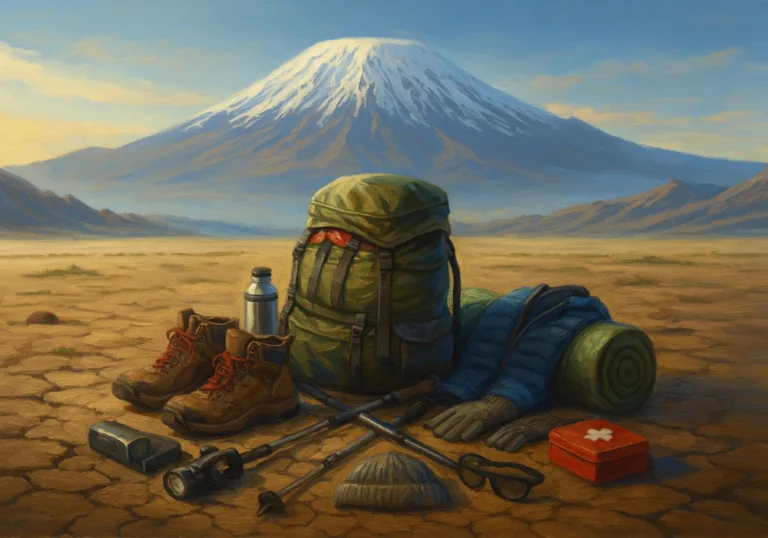
Equipment plays a crucial role in ensuring your comfort and safety during the climb.
Here are a few recommendations, depending on the season:
Equipment required in the dry season
Be prepared for low temperatures at the summit and dry conditions on the trails. Layered clothing and a good sleeping bag (which can keep you warm even at temperatures of -20°C) are essential.
During my ascent of Mount Kenya, I had the displeasure of not sleeping for several nights, particularly between midnight and 6am, because of a bad sleeping bag. If there’s one thing I regret, it’s not having done my homework beforehand, which would have saved me a lot of inconvenience. I made it to the summit, but by the time I got back, I was exhausted and slept for 18 hours straight.
Equipment for the wet season
Bring waterproof clothing, gaiters to protect your shoes, and waterproof bags to keep your equipment dry.
I’d also recommend a waterproof hard shell jacket, so you don’t get wet at the top. Four things need to stay dry at all times: your feet, hands, head and back.
For bottoms, try to have an over-trouser just in case, or pants made of Gore-Tex-type material.
Anticipate tourist numbers and book in advance
The high season (June to August) is very popular with hikers from all over the world.
If you choose this period :
- Book early: Places on popular routes and in camps can fill up fast.
- Avoid classic, overcrowded routes such as the Lemosho route. Consider less crowded routes, such as Rongai or Shira.
Take into account physical condition and preferences
Your fitness level and personal expectations should also guide your choice of period:
- If you’re used to tough conditions, you might want to consider less popular periods for a unique challenge.
- If you prefer to maximize your comfort and chances of success, opt for dry seasons with predictable weather conditions.
Financial considerations: seasonal travel costs
The period you choose for your ascent also has a significant influence on the cost of your expedition.
The high season, from June to October, offers the best weather conditions for climbing Kilimanjaro. However, this period is marked by an increase in agency rates and airfares due to the crowds.
On the other hand, the low season attracts fewer visitors, which translates into more affordable prices. However, frequent rainfall and unstable conditions at the summit can complicate the climb and reduce your chances of success.
Conclusion: Choose the right moment for an unforgettable climb
Climbing Kilimanjaro is a unique adventure that requires rigorous preparation, and the choice of the right time of year plays a decisive role in the success of your ascent.
Depending on weather conditions, your tolerance for crowds and your personal preferences, each season presents its own advantages and challenges.
January to mid-March and June to October are the best times to visit, offering stable weather conditions and spectacular scenery.
However, if you prefer to avoid the crowds or cut costs, the low season may be a viable option, provided you’re well-equipped to cope with bad weather.
Ultimately, careful planning, tailored to your abilities and objectives, will enable you to enjoy a memorable experience and contemplate the world from the roof of Africa.
Prepare well, choose your period carefully, and set off to conquer this mythical peak!