Lemosho Route Kilimanjaro: The Most Scenic Climbing Path
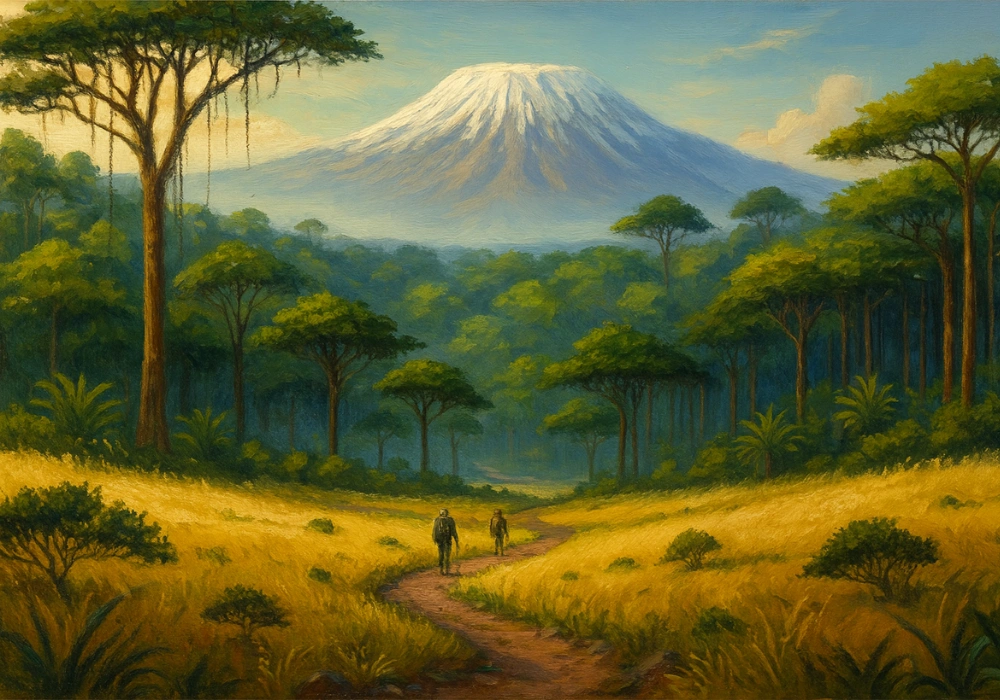
Dreaming of climbing Kilimanjaro, Africa’s iconic summit at 5,895 meters, and wondering which itinerary will give you the best adventure?
The Lemosho Route stands out as one of the most spectacular and well-balanced paths to reach the summit in the best possible conditions.
Praised for its gentle progression, scenic richness, and excellent acclimatization, it offers a unique journey through primary rainforest, volcanic plateaus, and high-altitude glaciers. Less crowded during the first days, it’s ideal for trekkers looking for an authentic and varied experience.
In this article, discover everything you need to know about the Lemosho Route: day-by-day itinerary, difficulty level, best time to go, gear to pack, and practical tips to prepare. Whether you’re a passionate hiker or chasing a personal challenge, the Lemosho Route offers an unforgettable adventure on the roof of Africa.
And to live this expedition with complete peace of mind, we recommend our partner Jambo Kilimanjaro, specialists in tailor-made treks with experienced local guides. Book your Lemosho Route climb now and turn your dream into reality.
Your free quote for climbing Kilimanjaro
Prepare your adventure with complete peace of mind: receive a personalized estimate within 24 hours, tailored to your dates, your level, and your wishes.
Why choose the Lemosho Route to climb Kilimanjaro?
An overview of the Lemosho Route: what to expect
General overview of the Lemosho Route
The Lemosho Route is considered one of the most beautiful and complete itineraries to climb Kilimanjaro. Spanning 7 to 8 days, it starts on the western side of the mountain and crosses a wide diversity of landscapes: dense tropical rainforest, heather moorlands, alpine plains, and glaciers.
This route offers an ideal acclimatization profile, notably thanks to the “climb high, sleep low” principle. After two days through relatively isolated zones, it joins the Machame Route at Lava Tower, before continuing to the summit via Barafu Camp and a descent down the Mweka Route.
Why choose the Lemosho Route?
The Lemosho Route is one of the most beautiful and complete ways to climb Kilimanjaro. It starts on the western side of the mountain, on an isolated and wild slope, allowing a gradual immersion into nature. Thanks to its longer duration and well-thought-out itinerary, it’s one of the routes offering the highest summit success rate.
Why it stands out
It combines landscape diversity, strong acclimatization, low traffic in the first days, and an immersive camping experience. You cross tropical rainforest, volcanic plateaus, rocky ridges, and high-altitude glaciers. For lovers of adventure, nature, and challenge, Lemosho is a route that is spectacular, progressive, and reassuring all at once.
When is the best time to climb Kilimanjaro via the Lemosho Route?
The best months to climb Kilimanjaro via the Lemosho Route are from January to early March, and from June to October. These periods correspond to the dry seasons, with stable weather conditions, little rainfall, and excellent visibility.
During the rainy season (April, May, and November), the trail becomes more slippery and visibility is reduced, which can compromise the experience. While high season attracts more trekkers from day 3 onward, the first days of the Lemosho Route remain very quiet and unspoiled.
Pros and cons of the Lemosho Route
Advantages of the Lemosho Route
- Excellent acclimatization thanks to a gradual ascent and well-designed elevation changes
- Some of Kilimanjaro’s most spectacular scenery: the Shira Plateau, Barranco Wall, summit glaciers
- High success rate, especially on the 8-day version (often above 90%)
- Departure from a quieter slope, with real wilderness immersion during the first days
Disadvantages of the Lemosho Route
- Higher cost than other itineraries, due to the longer duration and required logistics
- Longer and more complex access to the trek start point (Londorossi Gate, on the western side of the park)
- Less solitude from day 3 onward, when the itinerary joins the Machame Route
Day-by-day itinerary of the Lemosho Route
Day 1: Londorossi Gate (2,250 m) – Mti Mkubwa Camp (2,650 m)
Distance: ~6 km · Duration: 3 to 4 hours · Elevation gain: +400 m Environment: Dense tropical rainforest
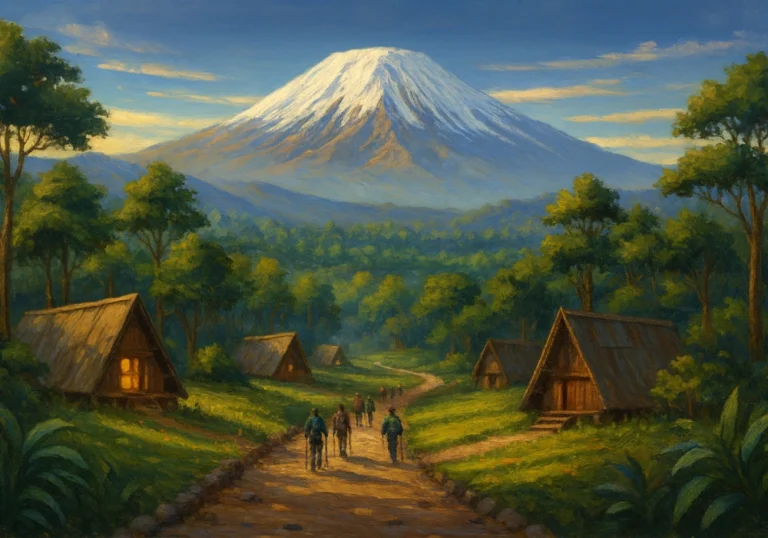
The trek begins in the rainforest on Kilimanjaro’s western slope. The trail is damp and shaded, filled with the calls of monkeys and birdsong. This first acclimatization day is relatively short, with about 3 to 4 hours of walking to reach the “Big Tree Camp”.
Atmosphere
- Shaded and humid trail
- Sightings of colobus monkeys and tropical wildlife
- First night at altitude under canvas
💡 Our tips: Wear breathable and waterproof clothing. Use trekking poles for muddy sections.
Day 2: Mti Mkubwa – Shira 1 Camp (3,610 m)
Distance: ~8 km · Duration: 5 to 6 hours · Elevation gain: +960 m Environment: High-altitude moorland
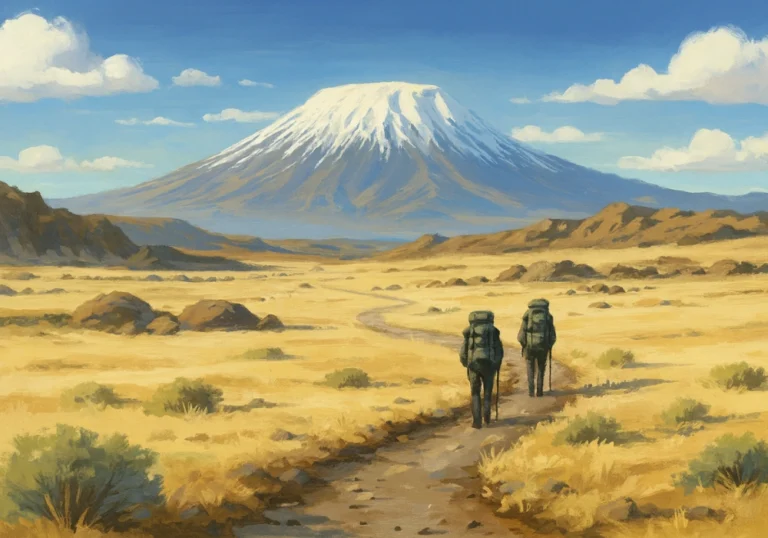
You quickly leave the forest and enter the alpine moorland. The landscape opens onto vast grassy plateaus and the first views of the summit appear. The ascent is gradual but steady, with 5 to 6 hours of walking up to the Shira Plateau.
Atmosphere
- Exit from the forest into grassy plains
- First clear views of the summit
- Gradual but steady climb
💡 Our tips: Walk slowly and hydrate regularly to start acclimatization on the right foot.
Day 3: Shira 1 – Shira 2 Camp (3,850 m)
Distance: ~7 km · Duration: 3 to 4 hours · Elevation gain: +240 m Environment: Volcanic plateau
This day involves a gentle climb across the Shira Plateau, an ancient eroded volcanic crater. The trail is relatively flat with spectacular views of Mount Meru to the west. You gain altitude slowly while preserving energy for the days ahead.
Atmosphere
- Easy hike on relatively flat terrain
- Stunning views of Mount Meru
- Moderate altitude but exertion still requires care
💡 Our tips: Stay active at camp to boost acclimatization, even after a short walking day.
Day 4: Shira 2 – Lava Tower (4,630 m) – Barranco Camp (3,960 m)
Distance: ~10 km · Duration: 7 to 8 hours · Elevation: +780 m / -670 m Environment: Alpine desert, volcanic rocks
One of the key days for acclimatization. Climb up to Lava Tower, a volcanic pillar at 4,630 m, before descending to Barranco Camp. This “climb high, sleep low” strategy helps the body adapt to altitude. About 7 to 8 hours of walking, sometimes demanding.
Atmosphere
- Gradual climb up to Lava Tower
- High-altitude pause for acclimatization
- Long descent to Barranco
💡 Our tips: Eat salty foods, drink plenty of water, and watch for signs of altitude sickness.
Day 5: Barranco Camp – Karanga Camp (3,995 m)
Distance: ~5 km · Duration: 4 to 5 hours · Elevation gain: +35 m Environment: Rocky ridges and valleys
First thing in the morning, you tackle the Barranco Wall, an impressive but accessible rock face. The path then winds through ridges and valleys, with stunning panoramas of the summit glaciers. About 4 to 5 hours of walking to Karanga.
Atmosphere
- Climbing the Barranco Wall
- Balcony trail with spectacular views
- Successive ascents and descents
💡 Our tips: Use your hands on some sections. Avoid rushing through the narrow passages.
Day 6: Karanga Camp – Barafu Camp (4,673 m)
Distance: ~4 km · Duration: 3 to 4 hours · Elevation gain: +678 m Environment: Mineral slopes, alpine desert
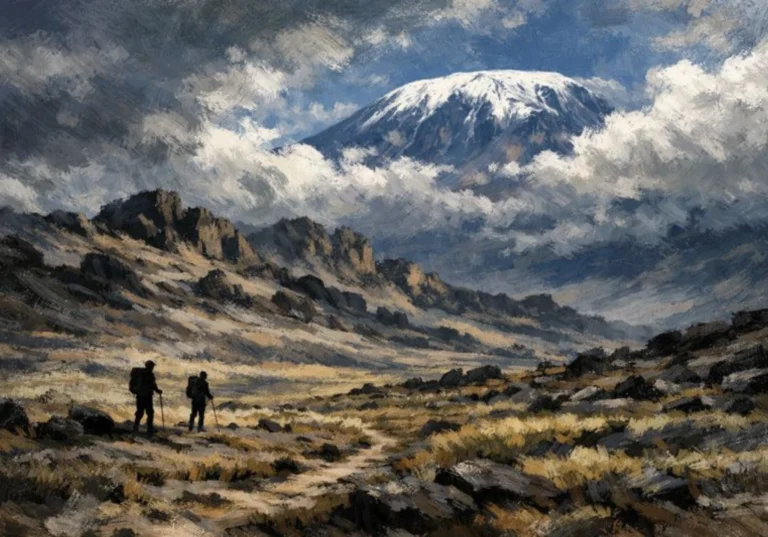
The climb to base camp takes place in a stark, rocky, wind-swept landscape. A short but demanding stage due to the altitude. Once at Barafu, strict rest, early dinner, and preparation for the final push planned at midnight.
Atmosphere
- Steady climb over rocky, slippery terrain
- The altitude really starts to make itself felt
- Arrival at the base camp for the final ascent
- Nap, very early dinner, then rest before the midnight push
💡 Our tips: Get into your sleeping bag by 6 PM. Prepare your gear the day before: warm clothes, headlamp, snacks.
Day 7: Barafu Camp – Uhuru Peak (5,895 m) – Mweka Camp (3,100 m)
Distance: ~17 km · Duration: 12 to 15 hours · Elevation: +1,222 m / -2,795 m Environment: Glacier, summit ridge, forest by the end of the day
Nighttime departure for the final ascent. The climb is brutal, freezing, and slow up to Stella Point, then Uhuru Peak — Africa’s highest point. Breathtaking sunrise at the summit. The descent is long and grueling all the way to Mweka Camp. Expect 12 to 15 hours of walking.
Atmosphere
- Nighttime ascent to Stella Point, then Uhuru Peak
- Unique sunrise experience on the roof of Africa
- Long and physically demanding descent to Mweka
💡 Our tips: Very slow pace, controlled breathing. Don’t stop too long on the way up.
Day 8: Mweka Camp – Mweka Gate (1,640 m)
Distance: ~10 km · Duration: 3 to 4 hours · Elevation loss: -1,460 m Environment: Tropical rainforest
Final day of descent through the rainforest. Conditions soften, vegetation becomes lush and humid again. After 3 to 4 hours of walking, you reach Mweka Gate, the official end of the trek and return to civilization.
Atmosphere
- Shaded and muddy trail
- Gradual return to warmth and humidity
- Official end of the trek at Mweka Gate
💡 Our tips: Use trekking poles for the descent. Don’t forget to thank the team with a tip if you can.
How to prepare for your Lemosho Route climb
What physical condition is needed to succeed on the Lemosho Route?
The Lemosho Route is one of the most complete and progressive itineraries on Kilimanjaro. Thanks to its longer duration (7 to 8 days), it allows better acclimatization, which boosts your chances of success.
But it remains a serious physical challenge: you’ll walk 6 to 8 hours a day, with a final ascent exceeding 12 hours. Strong endurance, fast recovery, and solid mental fortitude are essential to last the distance.
To discover a complete training plan, along with mental preparation advice, check out our full guide:
How to prepare physically and mentally to climb Kilimanjaro
What gear is essential for the Lemosho Route climb?
On the Lemosho Route, you cross every climate zone: rainforest, alpine moorland, alpine desert, and finally glacier. This means highly variable weather conditions, from dense humidity to freezing cold.
Technical and modular gear is essential to stay dry, warm, and comfortable at every stage.
For the complete list, check out our dedicated guide:
Kilimanjaro packing list: everything you need to climb
Lemosho Route tip: Bring solid trekking poles for the long climbing days and especially the steep descent after the summit, where fatigue hits the knees hard.
How to choose a reliable agency and porter team?
If you want to succeed on the Lemosho Route and head toward Africa’s summit with peace of mind, trust your adventure to Jambo Kilimanjaro, an experienced local agency.
You’ll benefit from professional support with certified English-speaking guides, well-treated porters, and complete logistics including transfers, accommodation, balanced meals, and suitable equipment.
With Jambo Kilimanjaro, you walk toward the summit with confidence.
Conclusion: the Lemosho Route, a complete and immersive way to climb Kilimanjaro
Choosing the Lemosho Route to climb Kilimanjaro means betting on a unique experience that combines adventure, wilderness immersion, and optimal acclimatization. Thanks to a progressive path that maximizes the chances of success, varied scenery from rainforest to eternal glaciers, and preserved isolation during the first days, this route appeals to motivated beginners and seasoned trekkers in search of authenticity alike.
While longer and more expensive than other itineraries, the Lemosho Route more than makes up for it with its natural richness and excellent success rate. Surrounding yourself with a competent local agency and preparing seriously will let you live an unforgettable climb toward the roof of Africa.
Ready to take the plunge? The Lemosho Route is waiting for you — and for professional, safe support, we recommend our partner Jambo Kilimanjaro, experts in tailor-made treks on this prestigious itinerary.