Rongai Route Kilimanjaro: The Quiet Climb from the North
Dreaming of climbing Kilimanjaro, Africa’s rooftop at 5,895 meters, but still hesitating on which route to choose?
Less known than the Machame or Lemosho, the Rongai Route stands out for its tranquility, its discreet access from the north, and its gentle progression — ideal for those seeking an ascent far from the crowds.
It’s one of the rare routes to start near the Kenyan border, in a drier zone, which makes it a strategic option during the rainy season. Thanks to its steady slope, strong natural acclimatization, and peaceful atmosphere, the Rongai Route appeals to well-prepared beginner trekkers, lovers of wild nature, and anyone looking for a more intimate Kilimanjaro experience.
In this article, you’ll discover everything you need to know about the Rongai Route: day-by-day itinerary, difficulty, daily walking time, best season, essential gear, and practical tips to prepare.
And to live this adventure in the best conditions, we recommend our partner Jambo Kilimanjaro, specialists in tailor-made treks with experienced local guides. Book your Rongai Route climb now and experience Kilimanjaro from a different angle.
Your free quote for climbing Kilimanjaro
Prepare your adventure with complete peace of mind: receive a personalized estimate within 24 hours, tailored to your dates, your level, and your wishes.
Why choose the Rongai Route to climb Kilimanjaro?
An overview of the Rongai Route: what to expect
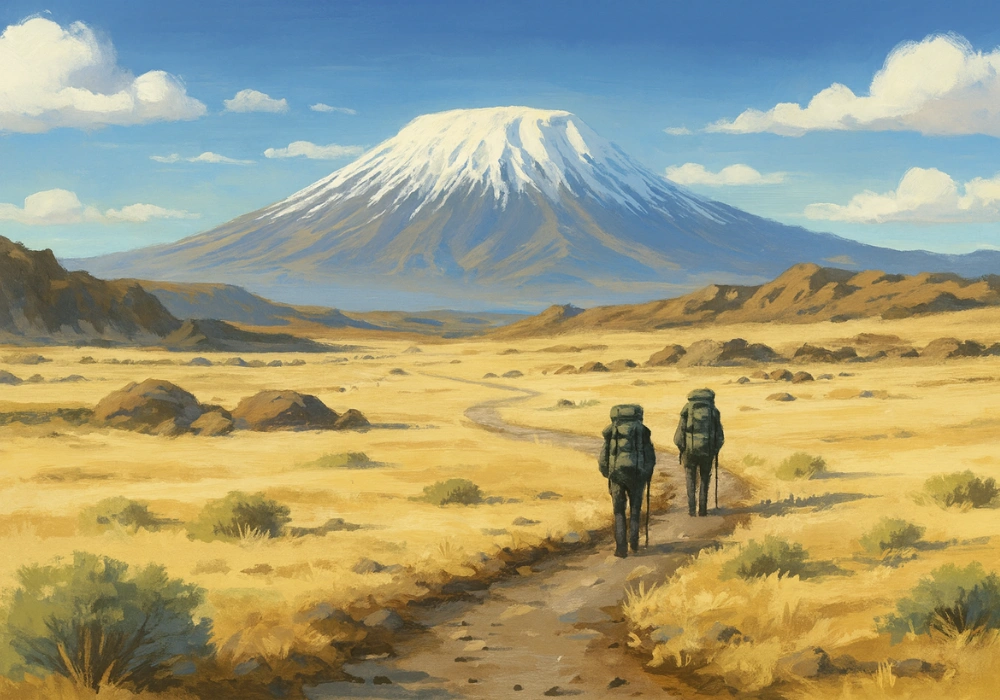
With its gentle slopes, moderate traffic, and wilder atmosphere, the Rongai Route is a perfect fit for trekkers who want to avoid overcrowded trails. The path crosses open landscapes, dotted with high-altitude savannas and clear views of the eastern face of the Mawenzi volcano.
While less spectacular in terms of ecological diversity than other routes like Machame or Lemosho, the Rongai Route stands out for its peaceful atmosphere, perfect for contemplation and steady effort.
When is the best time to climb Kilimanjaro via the Rongai Route?
Thanks to its location on the northern side of the mountain, the Rongai Route is less exposed to rain than the other routes. It can therefore be considered even during the wet seasons, making it a strategic alternative between April and May, or in November. The dry seasons (January to March and June to October) remain the most popular, with more stable weather and moderate temperatures.
What are the pros and cons of the Rongai Route? What makes it unique?
Advantages of the Rongai Route
- A wilder approach: the least commercialized route on Kilimanjaro
- Ecological diversity: spectacular transitions between ecosystems with clear views of Mawenzi and the savanna below
- Relative solitude: fewer trekkers for a more authentic experience
- Optimal acclimatization: ideal altitude profile for steady progression
- Favorable climate: less rain, even in the wet season
Disadvantages of the Rongai Route
- Less varied landscapes than on the Lemosho or Machame routes
- Longer and more expensive access to the trailhead
- Return via the Marangu Route, less wild and more crowded
Comparison with other routes
Unlike the Machame or Lemosho routes, the Rongai Route offers a more gradual and less technical approach — ideal for trekkers looking for a complete experience without the crowds.
Day-by-day itinerary of the Rongai Route
Day 1: Nalemoru Gate (1,950 m) – Simba Camp (2,650 m)
Distance: 8 km · Duration: 3-4 hours · Difficulty: Easy
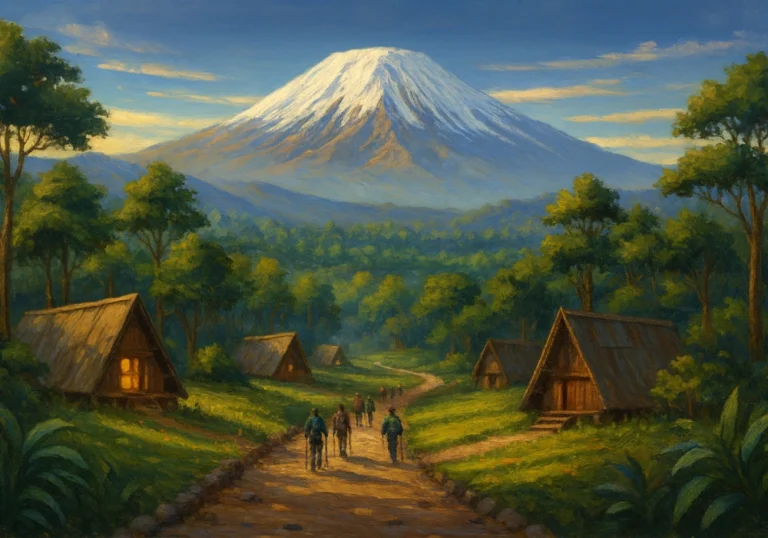
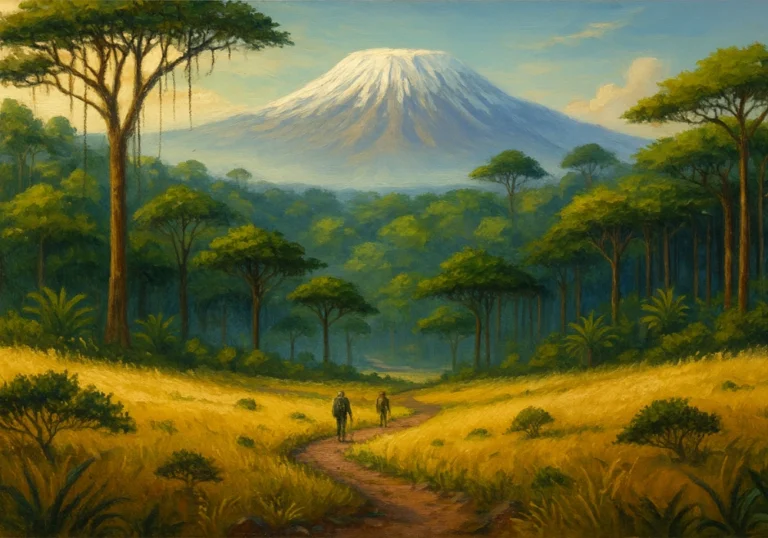
The first day begins at Nalemoru Gate (1,950 m), the official entry point of the Rongai Route. After a brief introduction and a permit check, you’ll begin a gentle and gradual climb through lush rainforest. This approach stage crosses a beautiful pine forest and offers your first views of the Kenyan plains.
The air thins as you push deeper into the forest, and you’ll quickly be surrounded by Tanzania’s wild beauty. Simba Camp (2,650 m) is your first refuge, offering a stunning view of the surrounding forests and easing your body into the ascent ahead.
Day 2: Simba Camp – Kikelewa Camp (3,600 m)
Distance: 6 km · Duration: 6-7 hours · Difficulty: Moderate
The second day involves a more technical but still accessible climb up to Kikelewa Camp (3,600 m). This stage marks the exit from the forest zone into the alpine moorland. The trail becomes steeper and the landscapes transform dramatically.
You’ll cross rocky areas and steep slopes, admiring the grand scenery around you. This stage is an excellent fitness test and lets you get familiar with climbing techniques. Kikelewa Camp, set in an alpine meadow zone, offers an exceptional panorama of Kilimanjaro’s crater.
💡 Nutrition tip: Increase your calorie intake to compensate for the extra effort caused by the rising altitude.
Day 3: Kikelewa Camp – Mawenzi Tarn Camp (4,300 m)
Distance: 5 km · Duration: 3-4 hours · Difficulty: Moderate to challenging
Day three marks a crucial transition in your climb: a short but key day for acclimatization. The trail leads toward the spectacular Mawenzi Tarn, a mountain lake at the foot of Mawenzi Peak, the second-highest summit of Kilimanjaro.
This stage is more demanding, with steep slopes and rocky passages, but the reward is huge: the breathtaking view of Mawenzi Tarn, an iconic spot on Kilimanjaro. Mawenzi Tarn Camp is a unique place, offering an unforgettable climbing experience.
💡 Acclimatization strategy: Use the free afternoon for a short acclimatization hike to a higher altitude before descending back to camp.
Day 4: Mawenzi Tarn – Kibo Hut (4,700 m)
Distance: 8 km · Duration: 5-6 hours · Difficulty: Challenging
Day four is the most difficult stage of your climb. It crosses the “saddle”, the wide pass between the Mawenzi and Kibo peaks. The terrain becomes more arid and the altitude makes itself felt. You’ll reach Kibo Hut (4,700 m), the starting point for the final ascent to the summit.
This stage features steep slopes and rocky sections, demanding strong fitness and solid climbing technique. Kibo Hut is an essential camp, offering rest before the final push to Uhuru Peak.
💡 Summit preparation: Go to bed early, hydrate well, and prepare your gear for the nighttime departure toward Uhuru Peak.
Day 5: Kibo Hut – Uhuru Peak (5,895 m) – Horombo Hut (3,720 m)
Distance: 21 km · Duration: 12-15 hours · Difficulty: Very challenging
The big day! Departure around midnight to reach the summit at sunrise. This day is the ultimate challenge of your adventure. You’ll get up very early for an intense final climb to Uhuru Peak (5,895 m), Kilimanjaro’s summit. The ascent is grueling, with steep slopes and shifting weather.
Once at the top, you’ll share an unforgettable moment with your team, watching the sunrise over the Tanzanian landscape. After a rapid descent, you’ll return to Horombo Hut (3,720 m) for a well-deserved night.
Key timings:
- 12:00 AM: Departure from Kibo Hut
- 6:00-8:00 AM: Arrival at Uhuru Peak (5,895 m)
- 10:00 AM: Return to Kibo Hut
- 4:00 PM: Arrival at Horombo Hut
Day 6: Horombo Hut – Marangu Gate (1,870 m)
Distance: 20 km · Duration: 5-7 hours · Difficulty: Easy
Day six marks the end of your adventure. The final descent crosses all of Kilimanjaro’s ecosystems in reverse, from alpine moorland to tropical rainforest.
You’ll descend gradually toward Marangu Gate (1,870 m), the endpoint of your trek. This descent lets you recover and enjoy the final moments of your journey. You’ll pass through varied landscapes, including villages and local farms. Marangu Gate is where your trek officially ends, and where you’ll receive your summit certificate.
How to prepare for your Rongai Route climb
What physical condition is needed to succeed on the Rongai Route?
Recommended training
3 to 6 months before departure:
- Regular hikes with elevation gain
- Strength training (legs, core)
- Cardiovascular exercises
- Simulations with a weighted backpack
To discover a complete training plan, along with mental preparation advice, check out our full guide:
How to prepare physically and mentally to climb Kilimanjaro
What gear is essential for the Rongai Route climb?
To face Kilimanjaro’s changing conditions, quality gear is essential. Whatever route you choose, you’ll deal with temperature swings, wind, humidity, and altitude.
For the complete list, check out our dedicated guide:
Kilimanjaro packing list: everything you need to climb
Rongai Route tip: here are the essentials to pack.
Technical clothing
- Layering system (base, insulation, shell)
- Waterproof jacket and pants
- Gloves, beanie, and sun protection
Mountain gear
- Sleeping bag rated for –10 to –20 °C minimum
- Broken-in trekking boots
- Trekking poles
- Headlamp and spare batteries
How to choose a reliable agency and porter team?
If you want to succeed on the Rongai Route and head toward Africa’s summit with peace of mind, trust your adventure to Jambo Kilimanjaro, an experienced local agency.
You’ll benefit from professional support with certified English-speaking guides, well-treated porters, and complete logistics including transfers, accommodation, balanced meals, and suitable equipment.
With Jambo Kilimanjaro, you walk toward the summit with confidence.
Conclusion: the Rongai Route, a peaceful and panoramic climb to the roof of Africa
Choosing the Rongai Route to climb Kilimanjaro means opting for a more confidential, progressive, and serene ascent — ideal for those who want to avoid the crowds without compromising their chances of success.
Thanks to a gentle altitude profile, strong natural acclimatization, and a drier environment, this route is particularly well-suited to trekkers seeking tranquility and logistical simplicity.
True, the scenery is less varied than on routes like Machame or Lemosho, but the clear view of the northern slope, the low traffic, and the smooth logistics make it both an accessible and rewarding experience.
By working with an experienced agency, surrounded by competent local guides and properly prepared physically, you’ll maximize your chances of reaching the roof of Africa in the best possible conditions.
Ready to live this off-the-beaten-path adventure? The Rongai Route is waiting for you — and for a well-supported climb with complete peace of mind, we recommend our partner Jambo Kilimanjaro, specialists in Kilimanjaro climbs.
This 6-day itinerary via the Rongai Route offers the perfect balance between challenge, acclimatization, and discovery. An unforgettable adventure awaits you at the heart of Tanzania