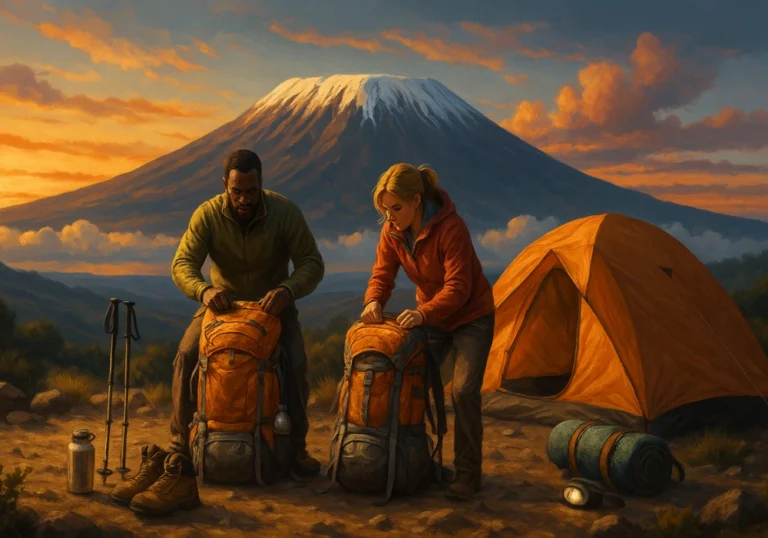
Londorossi Route Kilimanjaro: The Quietest Climbing Path
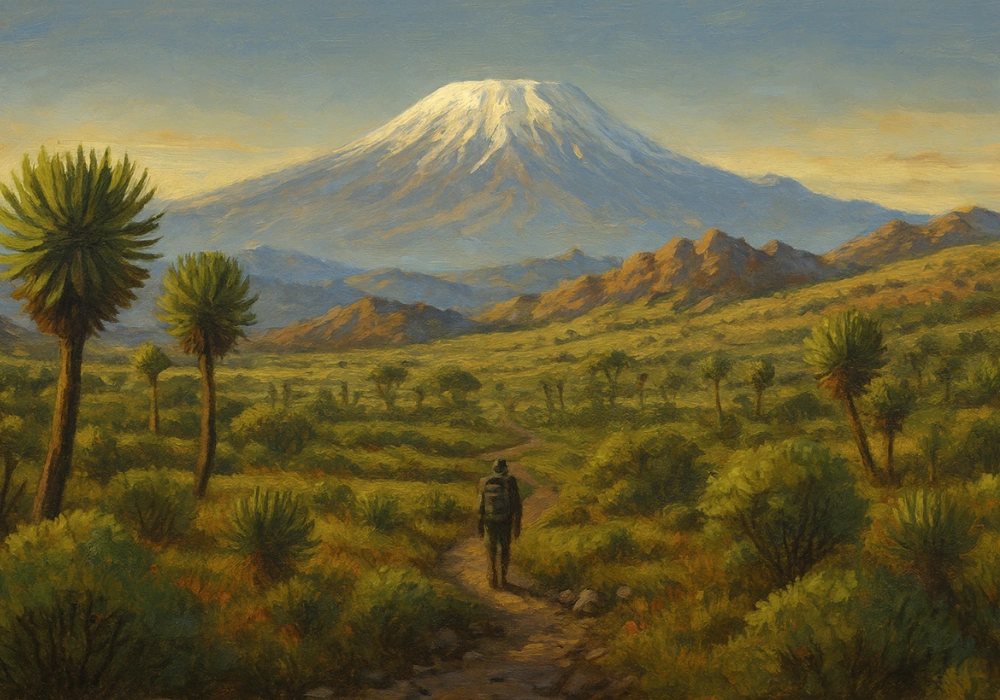
Dreaming of climbing Kilimanjaro, Africa’s iconic summit at 5,895 meters, and hesitating on which itinerary to take?
The Londorossi Route is an ideal alternative for those who want a quieter, more progressive, and more immersive ascent. Less well-known than other routes, it offers a unique experience through varied wild landscapes, with gentle acclimatization that maximizes your chances of success.
Starting on the western side of the mountain, this route crosses lush rainforest before reaching the Shira Plateau, then merges with the Lemosho Route to reach the summit via Barafu. It’s a smart choice for hikers seeking serenity, nature, and a well-designed itinerary built to handle altitude.
In this article, we guide you through every aspect of climbing Kilimanjaro via the Londorossi Route: itinerary overview, trek duration, difficulty, best time to go, gear to pack, and practical tips to prepare. Whether you’re a well-trained beginner trekker or a seasoned adventurer, this route promises a challenge as demanding as it is unforgettable.
And for an adventure supervised with seriousness and professionalism, we recommend our trusted partner Jambo Kilimanjaro, a local specialist in Kilimanjaro climbs. Book your Londorossi Route expedition today and bring your African altitude dream to life.
Your free quote for climbing Kilimanjaro
Prepare your adventure with complete peace of mind: receive a personalized estimate within 24 hours, tailored to your dates, your level, and your wishes.
Why choose the Londorossi Route to climb Kilimanjaro?
An overview of the Londorossi Route: what to expect
The Londorossi Route is a Kilimanjaro climbing itinerary that begins on the western side of the mountain. Less frequented than other classic routes, it spans 7 to 8 days and starts with a crossing through the rainforest, where you can spot preserved wildlife. The trail then climbs toward the high-altitude moorland of the Shira Plateau, offering superb panoramas of the volcano’s slopes.
This route then joins the Lemosho itinerary, allowing a progressive ascent that respects the “climb high, sleep low” acclimatization principle.
The summit ascent is made via Barafu Camp, before a long descent down the Mweka Route. An ideal itinerary for trekkers looking for calm, wild nature, and excellent acclimatization conditions.
When is the best time to climb Kilimanjaro via the Londorossi Route?
The best time to tackle the Londorossi Route is during the dry seasons: from January to early March, and from June to October.
During these periods, the climate is more stable, with clear skies and optimal walking conditions, which increases the chances of success and the overall quality of the experience.
April, May, and November should be avoided due to heavy rainfall, which makes trails muddy and weather conditions unpredictable.
In high season, although the Londorossi Route remains less busy than Machame or Marangu, rigorous organization with a local agency like Jambo Kilimanjaro guarantees comfort and safety throughout the trek.
Pros and cons of the Londorossi Route
Advantages of the Londorossi Route
- Exceptional scenery: crossing the Shira Plateau and unique panoramic views
- Excellent acclimatization: optimal altitude profile over 8 days
- Low traffic: less commercial route than Machame or Marangu
- Ecological diversity: all of Kilimanjaro’s ecosystems in a single trek, plus wildlife spotting in the forest (colobus monkeys, birds)
- High success rate: thanks to gradual progression and a long itinerary
Disadvantages of the Londorossi Route
- Higher cost due to trek duration and longer transfers
- More complex logistics to reach Londorossi Gate
- Less originality at the end of the itinerary after joining the Lemosho Route
- Requires solid endurance over time (7 to 8 days of walking)
Unique features of the Londorossi Route
What are the comparative advantages of the Londorossi Route?
Vs. Machame Route:
- Less crowded (around 30% fewer trekkers)
- Better acclimatization with an extra day
- More varied scenery via the Shira Plateau
Vs. Marangu Route:
- Greater technical challenge but more rewarding
- Incomparably more beautiful landscapes
- Camping under the stars vs. huts
Vs. Rongai Route:
- Easier access and simpler logistics
- Greater ecological diversity
- Exceptional panoramic views
What are the highlights of the route?
Shira Plateau: a geological jewel unique in the world. Barranco Wall: a memorable technical challenge without danger. Ecological diversity: 5 climate zones in a single trek. Optimal acclimatization: scientifically proven altitude profile.
Day-by-day itinerary of the Londorossi Route
Day 1: Londorossi Gate (2,250 m) – Mti Mkubwa Camp (2,650 m)
Distance: 6 km · Duration: 3-4 hours · Difficulty: Easy
Your Kilimanjaro summit adventure begins with arrival at Londorossi Gate (2,250 m), the official starting point for Londorossi treks, located on the western slope of Kilimanjaro.
After a brief introduction and a permit check, you’ll begin a gentle and gradual climb through lush rainforest, rich in biodiversity. The air thins as you push deeper into the forest, and you’ll quickly be surrounded by Tanzania’s wild beauty. This first stage is an ideal warm-up through the montane rainforest. Mti Mkubwa Camp (“Big Tree Camp”), your first refuge (2,650 m), offers a first taste of the beautiful landscapes that await.
💡 Acclimatization tip: Maintain an easy pace and hydrate regularly. This first day serves as a warm-up for the challenges ahead.
Day 2: Mti Mkubwa – Shira 1 Camp (3,610 m)
Distance: 8 km · Duration: 5-6 hours · Difficulty: Moderate
Day two involves a gradual climb up to Shira 1 Camp (3,610 m). A spectacular transition from rainforest to heather moorland, then to the first foothills of the Shira Plateau. You’ll cross zones of rainforest and alpine meadows, admiring the grand landscapes around you.
This stage is an excellent fitness test and lets you get familiar with climbing techniques. Shira 1 Camp offers an incredible view of the Shira Plateau, an impressive sight.
💡 Nutrition strategy: Increase your calorie intake to compensate for the extra effort caused by the rising altitude.
Day 3: Shira 1 Camp – Shira 2 Camp (3,850 m)
Distance: 7 km · Duration: 4-5 hours · Difficulty: Easy to moderate
Day three offers one of the most magical experiences of the trek: a full crossing of the legendary Shira Plateau, an ancient volcanic crater 13 kilometers in diameter, transformed into an open-air natural cathedral.
You progress through a striking lunar landscape, dotted with volcanic rock formations sculpted by millennia of erosion, creating a setting of surreal beauty.
The relatively easy progression lets you fully appreciate this geological wonder unique in the world, home to exceptional alpine flora with its giant senecios and ancient lobelias.
The 360-degree panoramas reveal the majesty of Kilimanjaro from every angle, from glistening glaciers to petrified lava flows. Settling in at Shira 2 Camp positions you ideally for the crucial next day, in a breathtakingly beautiful natural amphitheater.
💡 Photography tip: Make the most of the golden light at sunrise and sunset over the plateau to capture exceptional shots. Photographic conditions here are optimal!
Day 4: Shira 2 Camp – Lava Tower – Barranco Camp (3,960 m)
Distance: 10 km · Duration: 6-8 hours · Difficulty: Challenging
This fourth stage marks a turning point in your adventure with the rigorous application of the “climb high, sleep low” acclimatization principle.
The morning climb to the imposing Lava Tower (4,630 m) confronts you with a physical and mental challenge, crossing increasingly austere landscapes where vegetation thins out until it disappears completely.
This petrified lava tower, a remnant of ancestral volcanic activity, marks your temporary high point and offers a striking panorama over Kilimanjaro’s glaciers.
After a well-earned lunch break in this impressive mineral environment, the technical descent toward Barranco Camp leads you through rocky terrain that demands focus and care. This acclimatization strategy optimizes your physiological adaptation while preparing you mentally for the technical challenges of the famous Barranco Wall that awaits.
💡 Technical challenge: The descent to Barranco demands constant vigilance on unstable terrain. Use your trekking poles and follow your guide’s advice closely.
Day 5: Barranco Camp – Karanga Camp (3,995 m)
Distance: 5 km · Duration: 4-5 hours · Difficulty: Challenging
Day five confronts you with one of the most iconic and photogenic moments of the climb: conquering the legendary Barranco Wall.
This impressive 300-meter rock face, nicknamed the “Breakfast Wall”, is a fascinating technical challenge that briefly turns trekkers into real climbers.
The climb, although non-technical, demands the use of all four limbs to progress along rocky ledges and clear exposed sections in a choreographed sequence led by your experienced guide.
Once the wall is conquered and the spectacular view from the top savored, the route leads you through desolate alpine valleys with striking mineral landscapes, witnesses of ancient volcanic activity.
The progression toward Karanga Camp winds between volcanic rocks and dry ravines, in a high-mountain desert setting of stark beauty. This strategic camp is your last stop before base camp, and also the last point to refill fresh water before the final push.
Day 6: Karanga Camp – Barafu Camp (4,673 m)
Distance: 4 km · Duration: 4-5 hours · Difficulty: Challenging
This penultimate stage launches you into a mineral, desert universe, marking the entry into Kilimanjaro’s extreme alpine zone.
The sustained climb to Barafu Camp crosses a lunar landscape sculpted by glacial winds and extreme conditions, where only a few hardy alpine plants punctuate the rocky vastness. The effort grows more intense as oxygen thins, every step demanding sharper concentration.
Arrival at Barafu base camp, perched on a wind-swept rocky spur, marks a crucial moment of your adventure.
This intense preparation evening, punctuated by an early lights-out around 6 PM, prepares you mentally and physically for the ultimate challenge waiting just a few hours away.
💡 Mental strategy: Visualize your success at the summit in every detail. Psychological preparation is as crucial as technical gear when facing extreme conditions.
Day 7: Barafu Camp – Uhuru Peak (5,895 m) – Mweka Camp (3,100 m)
Distance: 17 km · Duration: 12-16 hours · Difficulty: Extreme
THE BIG DAY! This day is the absolute peak of your African adventure. The 11:30 PM wake-up in the icy darkness of Barafu Camp launches an epic six-to-eight-hour night ascent through a ghostly landscape, lit only by your headlamps piercing the dark.
Every step in the snow and on frozen volcanic rock brings you closer to the Holy Grail, despite extreme conditions where temperatures drop to –25 °C (–13 °F) and oxygen thins dramatically.
Arrival at Uhuru Peak (5,895 m) at sunrise is one of the most moving moments: the 360-degree panorama over an awakening Africa, equatorial glaciers shimmering under the first rays.
After photos immortalizing this magical instant, the long 2,800-meter descent to Mweka Camp tests your endurance and focus before a well-deserved rest.
💡 Effort management: Save your energy during the night climb by adopting a steady, controlled pace. The long descent demands constant attention to protect your knees and avoid falls.
Summit day timeline:
- 11:30 PM: Wake-up and preparation
- 12:00 AM: Departure from Barafu Camp
- 6:00-8:00 AM: Arrival at Uhuru Peak (5,895 m)
- 10:00 AM: Return to Barafu Camp
- 2:00 PM: Descent toward Mweka Camp
- 6:00 PM: Arrival at Mweka Camp
💡 Descent management: The 2,800-meter descent is grueling on the knees and requires sustained concentration despite the fatigue.
Day 8: Mweka Camp – Mweka Gate (1,640 m)
Distance: 10 km · Duration: 3-4 hours · Difficulty: Easy
This final stage brings you gradually back to civilization through the lush Mweka rainforest — a striking contrast with the lunar and icy landscapes you’ve just left.
The gentle, steady descent through this green corridor populated with exotic birds and primates lets your body and mind fully savor the achievement of the previous days.
Arrival at Mweka Gate officially marks the end of your Kilimanjaro epic with a moving ceremony to hand out summit certificates — official documents attesting to your feat on the roof of Africa.
💡 A moment of gratitude: Use this final stage to sincerely thank your Tanzanian team and fully savor the pride of joining the privileged circle of Kilimanjaro conquerors.
How to prepare for your Londorossi Route climb
What physical condition is needed to succeed on the Londorossi Route?
The Londorossi Route is one of the routes with the highest summit success rate. The main demand is being able to walk 8 consecutive hours with an 8-10 kg backpack without excessive exhaustion.
For a complete training plan and mental preparation advice, check out our full guide:
How to prepare physically and mentally to climb Kilimanjaro
What gear is essential for the Londorossi Route climb?
To face Kilimanjaro’s changing conditions, quality gear is essential. Whatever route you choose, you’ll deal with temperature swings, wind, humidity, and altitude.
For the complete list, check out our dedicated guide:
Kilimanjaro packing list: everything you need to climb
Londorossi Route tip: pack warm clothing from day one, since the climb starts higher (around 2,300 m) and the nights are cool right from the start.
How to choose a reliable agency and porter team?
If you want to succeed on the Londorossi Route and head toward Africa’s summit with peace of mind, trust your adventure to Jambo Kilimanjaro, an experienced local agency.
You’ll benefit from professional support with certified English-speaking guides, well-treated porters, and complete logistics including transfers, accommodation, balanced meals, and suitable equipment.
With Jambo Kilimanjaro, you walk toward the summit with confidence.
Conclusion: the Londorossi Route, an ideal choice for trekkers seeking tranquility and acclimatization
Choosing the Londorossi Route to climb Kilimanjaro means betting on a quieter, more progressive, and more intimate experience. Thanks to a long itinerary that favors optimal acclimatization, a wild first leg through the rainforest, and a high success rate, this route appeals to trekkers in search of preserved nature and safety.
Less frequented than other itineraries, the Londorossi Route offers a quieter setting and an authentic immersion into Kilimanjaro’s ecosystem. Despite slightly more complex logistics and a marginally higher cost, it remains an excellent choice for those who want to give themselves every chance of reaching Uhuru Peak with peace of mind.
Want to experience an ascent at your own pace, far from the crowds? The Londorossi Route is for you. And for a well-supported adventure, don’t hesitate to call on our trusted partner Jambo Kilimanjaro, specialist in Kilimanjaro climbs.
Hesitating between routes? Compare the Londorossi with the Machame, Marangu, Lemosho and Rongai routes to find your match.
Every year, thousands of adventurers from around the world choose the Londorossi Route to fulfill their dream of reaching Uhuru Peak. This transformative experience will reveal your limits, awaken your inner strength, and leave you with unforgettable memories.
Are you ready to join the prestigious circle of Kilimanjaro conquerors?
The adventure of your life starts with a first step. The Londorossi Route is waiting to lead you toward the summit of your dreams and beyond your limits.
Uhuru Peak is calling. Will you answer the call?